Martijn van Welie
Users want to form a group of users with shared interests, that allows them to engage in community activities.
The site is either directly a or it is a site where forming a community fits logically with the topic of the site. For example, sites that discuss products can create communities around the products themselves. Therefore, a or or can also have a community experience as a secondary experience next to its primary experience.
 From
www.leasecompare.com
From
www.leasecompare.com
Create a site where users can collect, share, relate and donate
Creating a community is done by offering possibilities to engage in community activities. Community building is about sharing opinions, being heard, helping others, creating and sharing objects. All of these activities are done in an atmosphere of openness, honesty and free of charge.
There are several ways in which users can engage in community activities, for example:
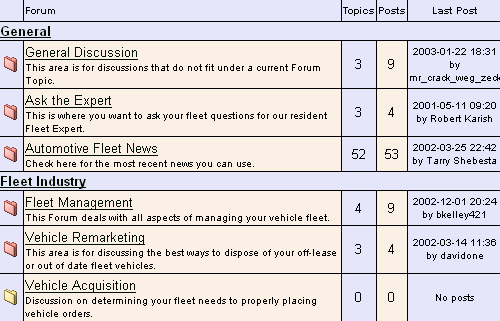
- A is a place where everybody can participate in a discussion on a particular topic or sub-topic. Quite often it is important that users can participate anonymously in a forum.
- When the community is concerned with 'products' in the most general sense, users can offer reviews or ratings of the product on the . This way they can share their experience with the product.
- Recommendations are an extension of reviews where a users can create true recommendations, for example books on a certain topic. Another way is to a link to a product or information that could of interest for a friend.
- A allows users to vote on certain statements or rate a particular product.
- A can be used to keep a group updated about the group's activities or about a particular topic.
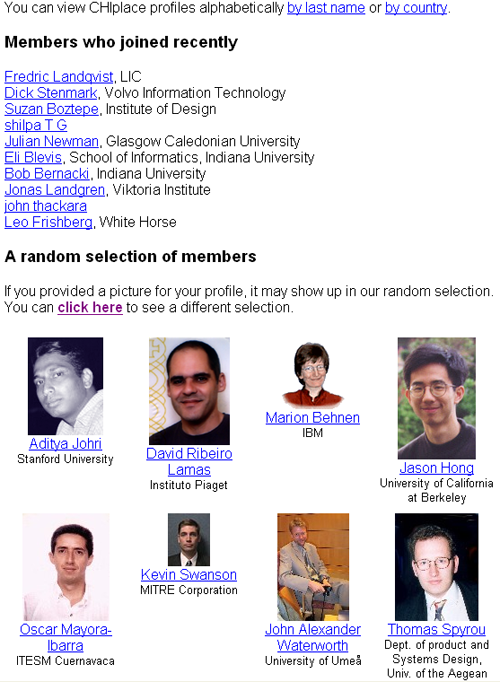
- A community is by definition composed of a group of people, often group of volunteers. Therefore, an overview of the members important to show who actually are part of the community. Along with this, their background or online status can be listed as if often done in a .
- Allow users to create their own things. For example, some sites organize contents where visitors are invites to send in their choice of the funniest image on a certain topic. Another for of expression could be to allow visitors to create their own personalized or a Personal Site
The combination of functionalities that is appropriate will depend on the sort of site and how much interaction within the community is desired. A Newsletter or Product Recommendations are relatively long term functionalities, whereas a Poll or a Forum will give people a reason to re-visit a site daily.
Communities are not designed or generated. One can only supply the means to a group of people and they will for the community by themselves.
At www.chiplace.org, members of the CHI community can discuss and share their ideas. This screenshot is taken from the members section where the new members are listed and a selection of the existing members is shown.
 www.chiplace.org; www.esato.com; www.cnn.com; www.amazon.com